Payment Innovation Must Be Accompanied by Strong Distribution

This article by Jay Bhattacharya, Founder and CEO of Zipmark, was originally published at paymentssource.com.

The changes happening in digital payments today are being driven by fintech innovators improving almost every way that people and businesses exchange and manage their money.

The “Uber of X” boom is affecting every industry and innovative companies responded and achieved market share by focusing on products that serve the unmet needs of these companies. But innovative products need to be accompanied by strong distribution strategies that drive market share from incumbents and stay relevant.

A natural progression is that as the market evolves, the focus on product is joined by pressure to distribute and service customers. Running parallel to these developments in fintech are large companies with more traditional products who are struggling for growth and slow to innovate in the face of changing business norms.

In recent years the big players have taken notice of the innovations in fintech, and in a sign of maturation of the market, as well as leadership from smart executive teams, we’ve seen prominent names acquire fintech disruptors. PayPal acquired Braintree – Braintree acquired Venmo even before that – and Vantiv acquired Mercury. Going forward, we can expect that leading companies will find a way to absorb startups while rewarding entrepreneurs and investors for pushing innovation forward and opening completely new markets.

Similar to the emergence of marketplaces, we see similar first movers taking advantage of the opportunity for disruption in B2B payments and small business solutions.

These companies are shifting market share and getting the attention of companies through focused product offerings and differentiation from traditional payments through better usability, and ease of integration.

Digital payments is a massive industry that will support multiple winners and will always rely on new transformative technologies to drive the industry forward. Recent considerations are not an indication that the market is waning, but rather that is growing, becoming stronger, and opening to new competitive innovations.

Jay Bhattacharya is CEO and co-founder of Zipmark.

Payment Innovation Must Be Accompanied by Strong Distribution

What a tech bubble deflation and the recent financial crisis would have in common

With all this tech bubble talk, I’ve been thinking about the last financial crisis and whether there are any commonalities. There’s one big difference– a tech bubble deflation wouldn’t be the main event. Something else will be and that will be the catalyst for a sustained tech deflation.

For example, the Bernie Madoff scandal, which happened during the crisis, wasn’t the main event. It was the bigger financial crisis that hit Madoff’s inflows that uncovered his house of cards. Ponzi schemes break when inflows < outflows (I’m not insinuating that VC is a Ponzi scheme!).  For tech, something would have to impact the inflows into venture funds or exit opportunities significantly to cause a sustained deflation. Relevant questions should be “What would cause the Nasdaq to decline sharply?” or “What would make LPs stop investing in venture funds?”.

A tech deflation that happens in containment (no systemic risk/contagion) is a feature, not a bug, of the early stage tech industry. Startups are high risk/high reward. There’s alignment among parties involved that these investments are supposed to be risky. High variance is built into financial expectations. I’m not saying this won’t be a painful process, but it’s part of the process.

The SEC said the Bernie Madoff scandal was $64B theft. Most of that were fake markups that he created for his clients (sound familiar? i.e. unicorns). This event caused a lot of pain for high net worth investors but it feels mostly contained compared to the larger financial crisis.

On a related note: Lack of debt in tech makes a huge difference. We’re not playing with borrowed money. The reason why the recent financial crisis was so painful and hard to recover from is that it largely centered around debt. Debt is more tightly coupled and it’s expected to be a lot less risky. When these stable investment products become even a little unstable, it has huge impact because there’s not a lot of slack provided for variance.


Posted by John Ryu, Partner at Scout Ventures

What a tech bubble deflation and the recent financial crisis would have in common

A dead simple explanation of network effects

The concept of network effects and Metcalfe’s Law is really important in technology so it’s useful to understand how a network’s value grows with each new user that joins the network.  Here’s an attempt at making the power of network effects really easy to digest:

Step 1: Take a look at these three pictures

Two fax machines connecting to each other
Three fax machines connecting to each other
Four fax machines connecting to each other

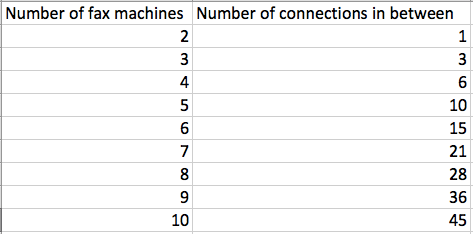
Each of the lines represents a connection that adds value to the network.  Let’s say each line is worth a value of 1.  Below is a table that shows how the number of possible connections grow as you add another fax machine to the network:

The relationship between the number in column 1 and column 2 turns out to be:

This equation is “proportional to n ^2”. The easiest way to think about this is that as n gets bigger, there’s not much difference between [n x n] and [n x (n-1)].

And you can see how fast this grows if we show a chart going up to 100 fax machines:

Screenshot 2015-05-21 21.10.59

That’s it!


This post was written by John Ryu, Partner at Scout Ventures. Follow him on Twitter.

A dead simple explanation of network effects

IPOs are not liquidity events

The world is abuzz about liquidation preferences right now so it’s really important to understand that IPOs are not liquidity events.

In multiple articles, I’ve seen writers assume that liquidation preferences protect late stage investors and effectively lock in a minimum return in an IPO. The reality is that:

In an IPO, all the preferred shareholders convert to common and this process ends up wiping out the waterfalls created by liquidation preferences

The source of this conflation is in how we define a liquidity event.

An IPO is not a liquidity event.  It’s mergers, acquisitions, and/or changes in control, etc. that are considered liquidity events.

Liquidation preferences only matter during the kind of events listed above– BUT don’t relax just yet.

The waterfalls from prefs may go away in an IPO but there are ways investors can dam up and divert some water to themselves

For example, if you look at the Box IPO, it wasn’t the liquidation preferences that protected Coatue and TPG. It was the ratchet and poison pill. Check out this EquityZen post for detail.

Given this different point of view, go back and read this old Bill Gurley piece about the benefits of IPOs vs staying private longer:

It is obviously quite ironic that the very event that many of these entrepreneurs were hoping to avoid (the IPO) becomes their only saving grace. Yet, because they did not focus on the normal steps that lead up to an IPO, they are ill prepared for this singular redemptive path.

Now, on the flip side, let’s say you’re running Uber and you have strong conviction on an IPO path. The more de-risked the path to IPO becomes, the less you should be concerned about liquidation preferences.

This post was originally published on Medium by John Ryu, Partner at Scout Ventures.

IPOs are not liquidity events

How To Raise $20.5 Million The Signpost Way

This post was originally published on Brad’s personal blog at mayorbrad.com 

This month our longtime portfolio company, SignPost, humbly announced the close of their $20.5 million dollar Series C.

The Company offers consumer marketing tools and manages its customers’ presence on sites like Yelp, while leveraging data from credit card transactions and social media to send targeted marketing messages that drive sales, referrals and reviews.

For Scout, it is a proud day because Stu Wall was one of our first entrepreneurs when we launched Fund I.   We were originally introduced to Stu through another one of our entrepreneurs, Dan Gellert.   Dan is another great entrepreneur with a special place in Scout’s legacy, as he was one of my first board seats.   He sold his company GateGuru to TripAdvisor which enabled us to make our first LP distribution in Year 1 and gave us the credibility to raise more money.

As I reflect on how proud I am of both entrepreneurs and the journey I’ve experienced with them as an investor, I think its important to reflect on how we got here and how to replicate this relationship with more entrepreneurs.

(1) Our best deals are normally sourced through our entrepreneur network.   This is why its so important to always treat an entrepreneur with a level of mutual respect.

(2) When you get to meet an amazing entrepreneur, have the mindfulness to identify their potential and don’t be caught up in the day to day to miss the opportunity.

(3) Each and every relationships between an entrepreneur and investor is based on trust and communication.  Without these two key variables, its difficult to build a company that can win.

(4) As an investor, as soon as you find a kick ass entrepreneur don’t hesitate in helping them build and motivate their team.   No great entrepreneur can build an awesome company without a supportive and passionate team.  Stu asked me to talk to the entire Signpost team (now 213 strong!) the day before we announced to them the news of this raise.  I was inspired and I think the team was pretty fired up as well.

Building great companies is hard to do and it takes a really, really long time.

Don’t rush.

Value each entrepreneur and spend your time making a difference, not being a pain in the ass.

***This post is dedicated to the memory of a new and dear friend.  All of our hearts are a little less full tonight.  We love you Kelsey.***

How To Raise $20.5 Million The Signpost Way

Valuation As A Coordination Device (Part 2)

This post was originally published by John Ryu on Medium

I wrote a post here awhile back titled “Valuation As A Coordination Device” but given the conversations today around valuations, I think it makes sense to highlight something I said in that post:

My response was to forget about that $5 million as valuation and to think of it more as a coordination device…

If everything goes the right way, what do you think the value of this startup will be 12 months from now?

And if you believe in the vision and potential growth trajectory, what does the ownership [and financing] of the company have to look like today so that everyone who has to be involved to enable it will be happy and motivated?

tldr: It’s helpful to think of a valuation as a coordination device that reflects the present state of a future high risk/high reward scenario playing out that makes everyone involved happy.


Valuation As A Coordination Device (Part 2)

Talking Tech With MeetAdvisors: Do VCs Read Business Plans?

This post was originally published by Brad Harrison at mayorbrad.com

I was recently invited over to MeetAdvisors for an interview with one of their hosts, Rachel Pollard. MeetAdvisors is a great platform where entrepreneurs can search for, find, and network with advisors and fellow entrepreneurs.
Rachel and I spoke about the recent history of startups, the genesis of Scout Ventures, how we view where technology is going, and about a very pressing question: do venture capitalists read or care about business plans?

Click here to watch the interview!

Talking Tech With MeetAdvisors: Do VCs Read Business Plans?

Are these the bubbles you’re looking for?

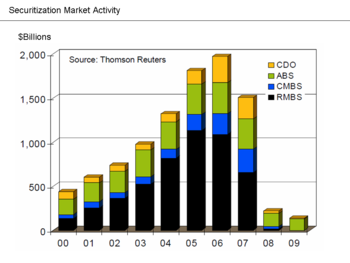
The more unicorn bubble chatter I hear, the more I think about the 2007 financial crisis and about the mispricing of risk that happened then.  At the root of all the bad stuff that occurred was the severe mispricing of mortgage backed securities (MBS) and collateralized debt obligations (CDOs).  Loans were pooled into portfolios and then those portfolios were sold off based on tranches of risk.  These derivative securities are very complicated and the big three ratings agencies (S&P, Moody’s, Fitch) were providing favorable ratings for them at the time.  Everyone went along with the ride until the market wised up.  At that moment, they became unsellable “toxic assets”.

350px-Securitization_Market_Activity

“By the end of 2009, over half of the CDOs by value issued at the end of the housing bubble (from 2005-2007) that rating agencies gave their highest “triple-A” rating to, were “impaired”—that is either written-down to “junk” or suffered a “principal loss” (i.e. not only had they not paid interest but investors would not get back some of the principal they invested).” – Wikipedia

To give you the severity of the mispricing:

“Rating agencies lowered the credit ratings on $1.9 trillion in mortgage backed securities from the third fiscal quarter (1 July – 30 September) of 2007 to the second quarter (1 April – 30 June) of 2008.” – Wikipedia

So why is this relevant today?


Because it prompts this question: Is there potential mispricing happening in the current tech boom? Here’s a stab at one answer: It’s right in front of the us on the cap tables of unicorns.


Here’s a growth stage fundraise example to illustrate how current valuations happen:

Company A growth round fundraise: $250 million
Shares sold: 10 million
Price per share: $25


Market Capitalization:
Screenshot 2015-05-01 16.25.34
Congrats, we just made a unicorn.


If billion dollar valuations have proliferated because investors are increasingly more comfortable with them as long as they get generous downside protection, then the value of that protection has to come from somewhere. It doesn’t appear out of thin air.


That additional downside protection in the form of things such as liquidation preferences and ratchets can negatively affect the other shareholders in any exit scenario that isn’t good to great. Common shareholders have it the worst because they are at the bottom of the totem pole.  In other words, the higher share price paid in later stage growth rounds should be partially offset by a decrease in price per share of the earlier classes of stock.


The standard method of calculating market capitalization “breaks” because not all shares are the same.  Shares of Series D Preferred should be more valuable than shares of Common, Series A, B, or C.


Instead of the market capitalization calculated above, a “truer” valuation would look something like this, where the price per shares for each class should be discounted relative to the latest round:


Company A example valuation using difference prices per class of stock:Screenshot 2015-05-01 16.41.24


 You can see this sort of exercise knocks off a lot from these valuations.  If the rise of unicorn valuations are partly explained by the tradeoff of more onerous liquidation preferences and other terms being piled into the later rounds, logic says that the earlier rounds should be discounted relative to the price paid in this round.


Anyways, this is one area where the traditional accounting methods fail to tell the complete story of what’s happening these days in the growth stages of venture capital.


Is this evidence of dangerous bubbles in formation?  In and of itself, no, but I’ll leave that open for you all to discuss.


Are these the bubbles you’re looking for?

You are the product until the product is ready

dagenclose

This post was originally published on Medium.

I meet with lots of founders who are quick to give me their startup elevator pitch. Yesterday, I was at an event where most of the founders I met were pre-product. They were all ready to get right into the pitch right as soon as we shook hands (this wasn’t a pitch event). I found myself saying “Great, I’d love to check it out when it launches” and the conversations continued on for a bit but they all pretty much ended there.

If you’re pre-product, I’d suggest a completely different way to approach these conversations — focus the story on yourself because you are the product until the product is ready.

Talk about who you are and what you know. Display your passion. Develop the story to show why you’re the right founder to be solving the problem you’re focusing on. Use this approach to build relationships so that when your product is ready for demo, investors will remember you and have context.

You are the product until the product is ready

The Modern Face of Angel Investing

This post was written by Ameet Padte and originally appeared on the SeedInvest Blog

Traditionally, the angel investor community has been comprised of a small set of well-connected individuals located in a few hub cities across the country. With the advent of online equity crowdfunding, this limited group is expanding and a new type of angel is emerging. Here are 5 ways that equity crowdfunding has changed angel investing:

1. Increased Access to Deal Flow
Prior to the rise of online funding portals, there were several hurdles limiting an investor’s deal flow. For one, an investor needed to be close to one of the country’s few innovation hubs (e.g. San Francisco, New York City, Boston, etc.) to reach entrepreneurs coming out of those regions. Unless they had strong personal or professional ties to established startup communities, investors outside these regions lacked direction when looking for startup investment opportunities. In addition, under the old rules of private placements (Rule 506(b) of Regulation D), companies were prohibited from advertising their raise, requiring that they rely on their existing networks and warm introductions, further containing investment opportunities within the existing startup community. Under Title II of the JOBS Act (Rule 506(c) of Regulation D), companies can now engage in “general solicitation” allowing them to advertise their raise and theoretically reach any accredited investor, regardless of location. This change in policy has allowed equity crowdfunding platforms to consolidate deal flow from around the country onto an easily accessible online platform, democratizing access across geographic and social lines.

2. Fresh Perspectives
Historically, investors have only diversified within the traditional asset classes (stocks, bonds, commodities, and currencies). Those who invested in private deals typically restricted investments to local real estate and small businesses. Startup investing was limited to investors with a pre-existing network and a history of activity in the startup space, often as both an entrepreneur and an angel investor. Equity crowdfunding is opening early-stage investing to individuals who haven’t spent as much time in the tech ecosystem. These angels can provide entrepreneurs with fresh eyes to judge their efforts and give feedback entrepreneurs may not have received from the traditional startup community. Furthermore, many of these new angel are successful professionals from various backgrounds who are able to use their career experiences to be true value-add investors, providing insightful advice, making strategic introductions, and leveraging their networks for the startups in which they invest.

3. Easier Evaluation
Even if investors had a strong network and access to entrepreneurs, they had to evaluate deals through the time-consuming process of meeting individual companies one-on-one. In addition, there has been no easy way to access the key documents and financials of a potential investment. Online equity crowdfunding platforms have streamlined this laborious process, allowing angels to engage with entrepreneurs online and consolidating a company’s business plan, legal documents, and financial information in one place. As a result, angels can now quickly conduct due diligence on multiple investment opportunities. Because angel investors review multiple startups across a variety of sectors, a new investor can now quickly gain an understanding of the startup investment landscape and feel more confident in evaluating potential investments.

4. Easier Diversification
Traditionally, angel investors placed relatively large bets on a small group of startups. This trend was driven by inadequate access to startups across verticals, limited exposure to high-quality deal flow, and the need for startups to achieve their fundraising goals from the small number of active angels in their community. Today, via equity crowdfunding platforms, angel investors can access multiple startup investment opportunities in a variety of industries. Also, because entrepreneurs fundraising through equity crowdfunding platforms have access to a larger group of potential investors, they can potentially achieve their fundraising goals with lower investment minimums and a larger number of investors. Angel investors can therefore diversify their startup investment portfolio by making smaller investments in a larger number of companies in various industries.

5. More Transparency
Dialogue between angel investors was historically limited. Geographic barriers and insular communities prevented communication between different angel groups. As a result, angel investors were limited to the viewpoints present in their immediate networks and were seldom exposed to outside ideas. Equity crowdfunding platforms break down these communication barriers and create online communities of investors. These serve as forums for investors from different backgrounds to discuss potential investments. Investors can share investment insights and learn from each other’s varied perspectives and experiences.

As newcomers to the field, today’s angels are bringing fresh perspectives to startup investing and contributing valuable knowledge, networks and capital to entrepreneurs. As their sophistication and experience grows, startup companies only stand to benefit from this new face of angel investing.


The Modern Face of Angel Investing